Home › Mobile Home and Manufactured Home Demolition
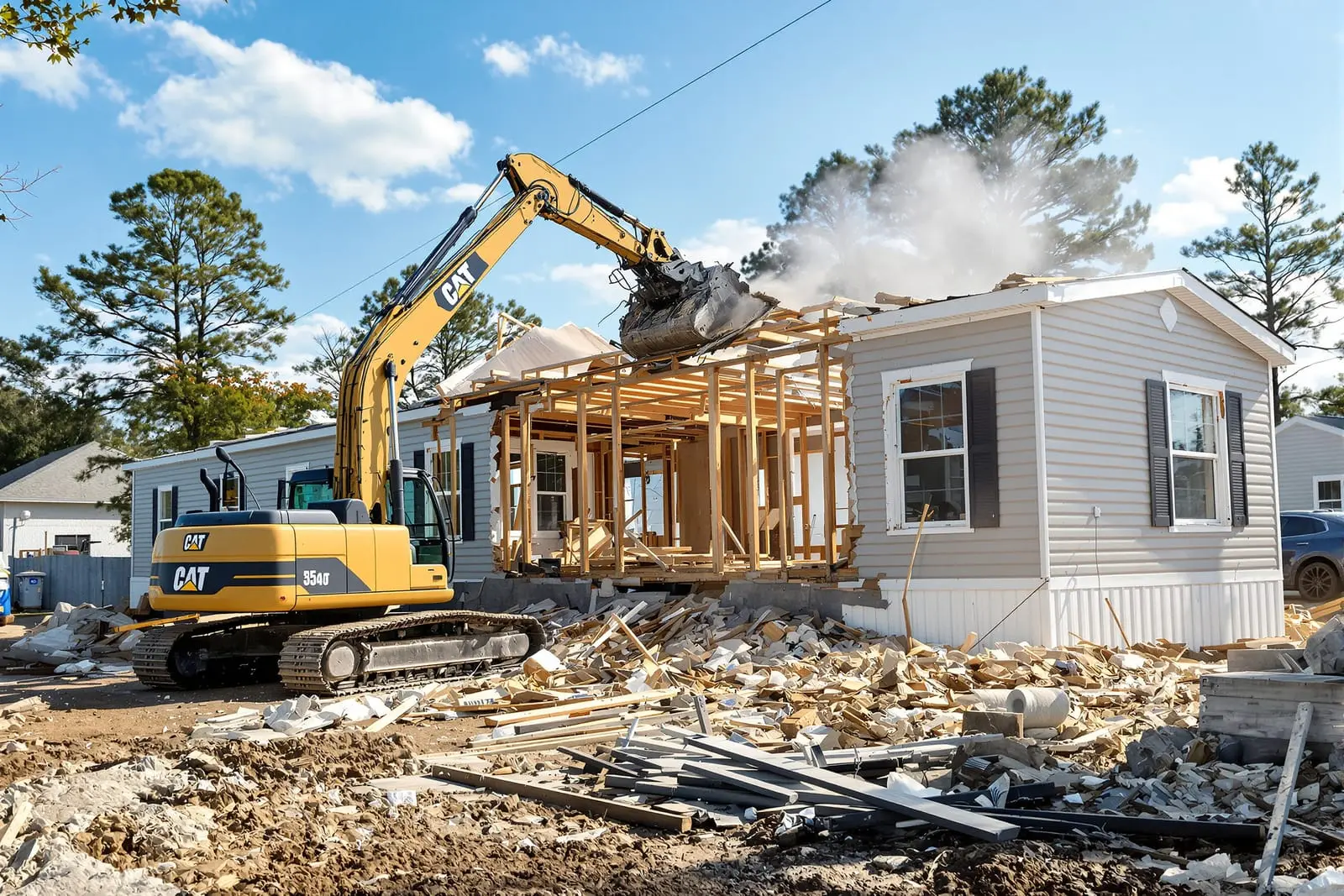
We provide mobile home demolition in Murfreesboro, TN for parks, private lots, and rural properties. Our team disconnects utilities, removes skirting and decks, and then efficiently demolishes or dismantles the structure. The site is cleared of debris and left graded so you can repurpose the space or install a new unit.
Wrexo Demolition Murfreesboro provides professional mobile home demolition throughout Murfreesboro, TN and the surrounding area. Our licensed, insured crew delivers safe, clean, on-time work with a free estimate before anything begins. Call (629) 276-6705 or request your free quote.
Mobile Home Demolition in Murfreesboro That Actually Solves Problems
Mobile and manufactured home demolition is not just knocking something over. In Rutherford County, these structures are tied into electrical service, gas, septic or sewer, and anchored to the ground in several different ways. Wrexo Demolition Murfreesboro focuses on clearing the structure safely so you can move ahead with a new build, resale of the land, or simply stop paying taxes and upkeep on an unusable home.
Before any work starts, we confirm who owns the home and the land, and whether the home has a title or has been converted to real property. This affects permits and sometimes disposal. Many older manufactured homes around Murfreesboro were set up in the 70s through early 90s and were not always documented cleanly. We help you sort out what your local officials will accept so the county records are clean when demolition is finished.
If your goal is a clean dirt pad ready for a new doublewide, a stick built home, or pasture, we plan the job around that end result. That plan includes how we will access the home with equipment without tearing up septic fields, how close we can safely work around neighboring homes, and the best approach for separating the steel frame and axles from the rest of the structure so scrapyards will actually take it.
How the Mobile Home Demolition Process Works Step by Step
Every project Wrexo Demolition Murfreesboro handles follows a clear process so you know what is happening and when.
1. Site visit and inspection: We walk the home and the property. We check age and condition of the unit, if it is single wide, double wide, or sectional, where the electrical service disconnect is, whether gas is propane or natural gas, and whether waste goes to city sewer or septic. We also look for add ons like porches, lean tos, or built on rooms that are tied into the trailer.
2. Utility coordination: You contact your power, gas, and water providers to schedule permanent disconnection at the pole or meter. If you want, we can be on site the day they disconnect so we are ready to start work as soon as they clear it. We never rely only on flipping breakers or valves on the home itself.
3. Hazard check: Older manufactured homes may contain asbestos floor tiles, mastic, some siding types, or insulation around ductwork. If the home appears to be from the mid 1980s or earlier, we will talk through whether testing is wise. If asbestos is present, regulated removal and disposal rules apply and we will build that into the plan and price.
4. Structural teardown: Once the home is safe to work on, we usually start by stripping recyclable and bulky items. That means removing appliances, steps, skirting, and any loose interior debris first. For most homes we then use an excavator to systematically collapse the structure inward, working from one end to the other. This controls where debris falls and keeps the frame accessible. If there are additions tied into the home, we often separate those first so they do not twist the main frame when pulled apart.
5. Separation of materials: We pull the steel frame, axles, and any heavy gauge metal aside for recycling. Remaining wood, insulation, roofing, and drywall are loaded into trucks or roll off containers for disposal. Concrete block piers, masonry underpinning, and small slabs are broken up and removed or left on site if you request that.
6. Final grading and cleanup: After the structure and piers are gone, we remove visible nails, metal scraps, plastic, and glass. We then rough grade the area. If you are planning a new home pad, we can leave the pad crowned for drainage. If you want open yard, we aim for a smooth, mowable surface.
Costs, Timing, and What Drives the Price of Mobile Home Demolition
The price of mobile home demolition in the Murfreesboro area is driven mostly by access, size, and what is attached to the home, not just square footage.
Access and terrain: A single wide in an open field with a solid gravel drive costs less to remove than the same home tucked behind trees off a soft driveway. If our trucks cannot get close, we spend more time moving debris out and may need smaller equipment. Steep or wet ground, common on some county roads outside Murfreesboro, can limit when we can safely work. During very wet winter months, we sometimes recommend waiting a few weeks to avoid rutting up your property and to keep equipment from getting stuck.
Size and construction: Single wides are usually cheaper to demolish than double wides or triple wides, but condition matters too. A collapsed roof or fire damage can actually cost more because debris is unstable and harder to separate. Heavy brick skirting, block foundations, and big covered porches can add noticeable labor and disposal weight.
Disposal and recycling: Rutherford County landfill fees and distance from the site affect cost. We reduce that by salvaging metal when practical, but customers should know that not every piece can be recycled if it is mixed with insulation or glued materials. If you have appliances, sheds, or junk piles to go with the home, we can include that in the same project, but it will affect the weight based disposal charges.
Extras that change pricing: Pumping and crushing old septic tanks, pulling up buried utility lines, removing large trees that overhang the home, and hauling off additional structures (sheds, decks, carports) are all options. Wrexo Demolition Murfreesboro will line item these so you can decide what fits your budget instead of getting one vague lump sum.
Permits, Utilities, and Local Rules for Manufactured Home Removal
In and around Murfreesboro, the rules for mobile home demolition depend on whether you are inside city limits or in the county, and whether the home is taxed as real property or personal property.
Permits: Inside Murfreesboro city limits and in many nearby jurisdictions, a demolition permit is required before we start. We help you identify which jurisdiction your property falls under and what paperwork they want. This typically includes a simple application, proof of ownership, and confirmation that utilities will be disconnected. For county properties, requirements can be lighter, but we still recommend documenting removal so your tax records can be updated.
Utility responsibilities: As the property owner, you must request final shutoff from Middle Tennessee Electric, Murfreesboro Water Resources, Atmos or your propane supplier, and any other utilities. Once they disconnect at the meter or pole, we cap and secure on site lines as needed and physically remove the home side connections during demolition. If there is a propane tank, we work with your propane company or a licensed contractor to move or remove it safely.
Titles and taxes: If the manufactured home is titled, you may need to surrender or retire the title once it is demolished. This can help avoid future confusion if you refinance or sell the land. After the work is complete, Wrexo Demolition Murfreesboro can issue a letter describing what was removed and when. Owners often give this to the county assessor or their closing attorney to show the improvement is gone.
Neighborhood and park settings: If your mobile home is in a park or on a rented lot, you must have written approval from the park owner or management to demolish instead of haul away. Some parks have strict rules about work hours, use of heavy equipment, and road protection. We coordinate with them so trucks and machines come and go with as little disruption as possible.
Planning Your Project and What to Do Before We Arrive
A smooth mobile home demolition project starts with a bit of preparation on your side and clear expectations on ours.
What you should remove: Personal belongings, furniture you want to keep, and anything sentimental should be gone before demolition day. If you want us to treat the home as total debris, we will, but that increases disposal costs because we are hauling household trash along with structural materials. Valuable metals like copper lines or newer HVAC units can sometimes be removed beforehand if you prefer to handle those yourself.
Scheduling around Tennessee weather: In Murfreesboro, late spring through early fall is typically the easiest time for mobile home demolition because ground conditions are better and daylight is longer. We work year round, but after long rains, soft ground can slow the job, cause ruts, and sometimes force rescheduling. If your site is low lying or has a known drainage issue, we may suggest timing the job to avoid the wettest spells.
Protecting your remaining property: Let us know if there are septic field lines, shallow water lines, or buried utilities near the home. Many older installations were never mapped. We use utility locate services for public lines, but private lines on your property are often unknown. If you know where cleanouts, tanks, and lines are, we plan machine paths to avoid them. If there are trees, fences, wells, or driveways you care a lot about, we walk those on site with you before we start.
What you receive when we are done: Wrexo Demolition Murfreesboro provides photos of the finished site if you want them for your records, along with receipts or documentation you may need for the county or your lender. We clarify up front whether you want all concrete and pier blocks removed, whether you want topsoil brought in, or whether you just want it leveled with existing dirt. That way, when we leave, the pad or open ground matches the plan you had in mind.
“
Professional mobile home and manufactured home demolition, done right the first time, quality materials, honest pricing, and results that last.
Wrexo Demolition Murfreesboro
Mobile Home and Manufactured Home Demolition Across Our Service Area